


Elderly home medical care can be a reassuring option when an older parent or relative needs a non-emergency medical review but travelling to a clinic is difficult. For families around Sungai Buloh, Shah Alam, and nearby Selangor communities, the goal is not to replace hospital care. It is to make a safe, practical assessment possible at home when the situation is suitable.
A home visit may involve listening to symptoms, checking vital signs, reviewing medicines, discussing mobility or wound concerns, and deciding whether clinic follow-up, tests, referral, or urgent care is needed. This article explains how families can prepare for elderly home medical care in a medically responsible way, without assuming that every problem can be solved at home.
This guide is general health education only. It cannot diagnose your parent, decide on medication changes, or replace an in-person assessment by a qualified healthcare professional. Please seek urgent help for severe or rapidly worsening symptoms.
Elderly home medical care: what it means for families
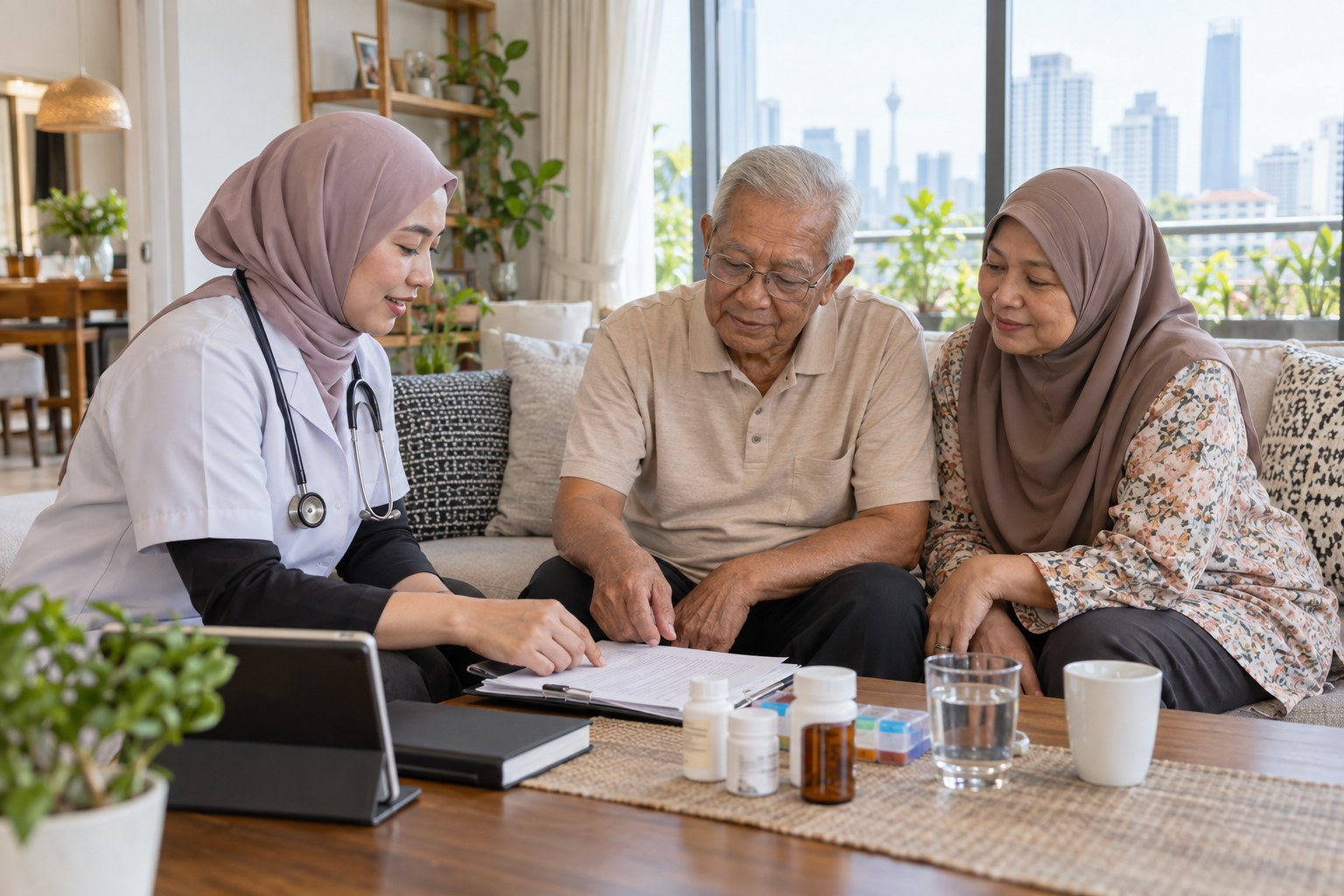
Elderly home medical care usually means a planned, non-emergency visit where a clinician reviews the older adult in their home environment. It can be helpful when frailty, joint pain, fatigue, transport issues, or caregiver schedules make clinic travel hard. It can also help families explain the real-life situation: how the patient moves around the house, how medicines are stored, and what daily tasks have become difficult.
Klinik Lanaamedik has a verified home visit doctor page, and families may also find the doctor home visit Sungai Buloh, chronic disease management, and primary care services pages relevant when planning ongoing care.
For broader context, Malaysia’s public services portal describes healthcare services for older persons as including screening, treatment, advice, referral when necessary, and home visits in selected settings. The World Health Organization also frames healthy ageing around maintaining functional ability and wellbeing, which is why home environment and family support often matter alongside clinic treatment.
7 practical ways to support safer elderly care at home
1. Write down the main concern before the visit
Before arranging elderly home medical care, write one clear sentence about the main concern. For example: “Mum has been more breathless for three days,” or “Ayah’s wound dressing keeps getting wet.” Add when it started, what has changed, and what worries the family most. This prevents the visit from becoming a rushed list of scattered symptoms.
If several relatives are involved, agree on the top two or three questions before the clinician arrives. Older adults can feel overwhelmed when everyone talks at once, so one calm spokesperson is often more helpful.
2. Gather medicines, allergies, and recent records
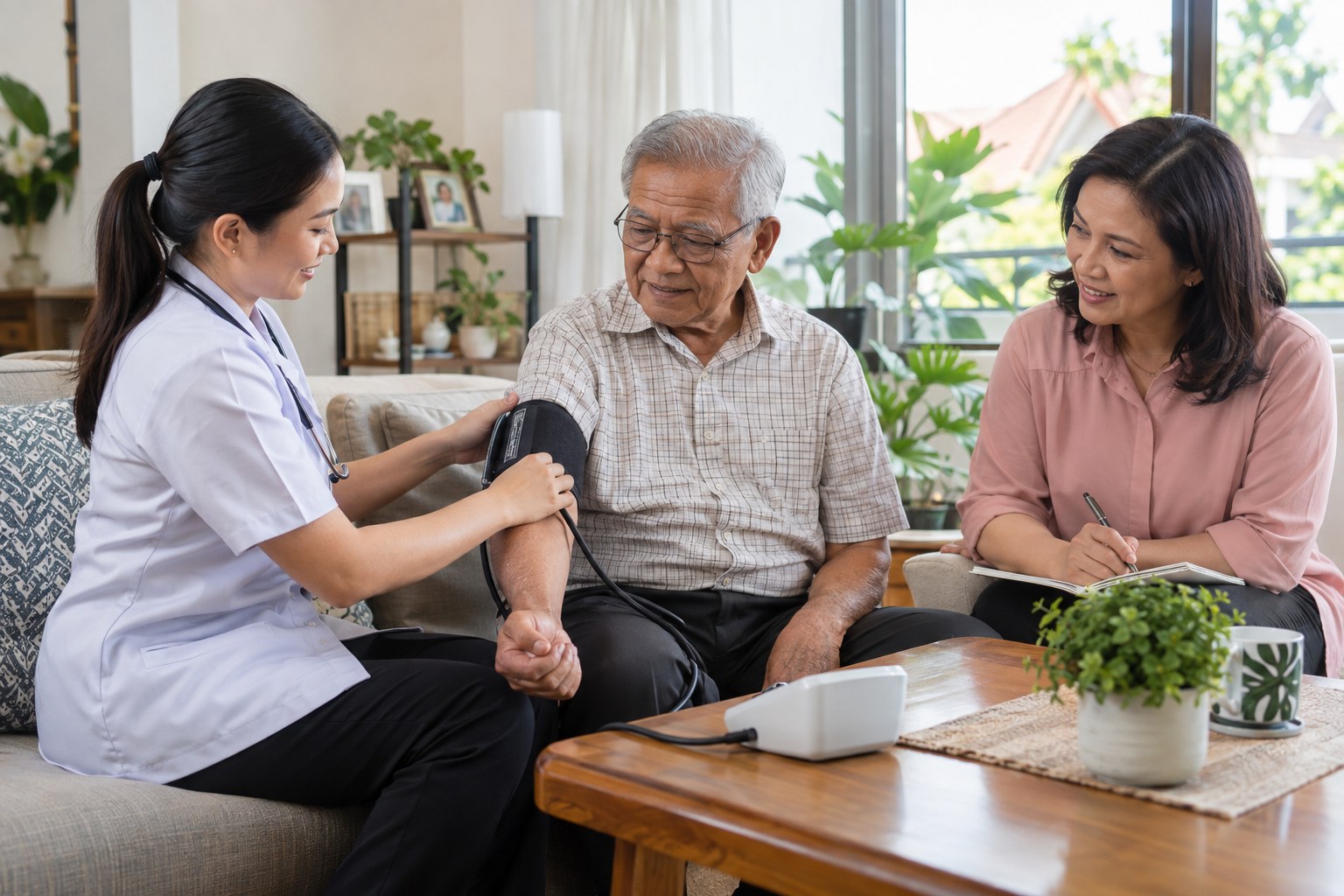
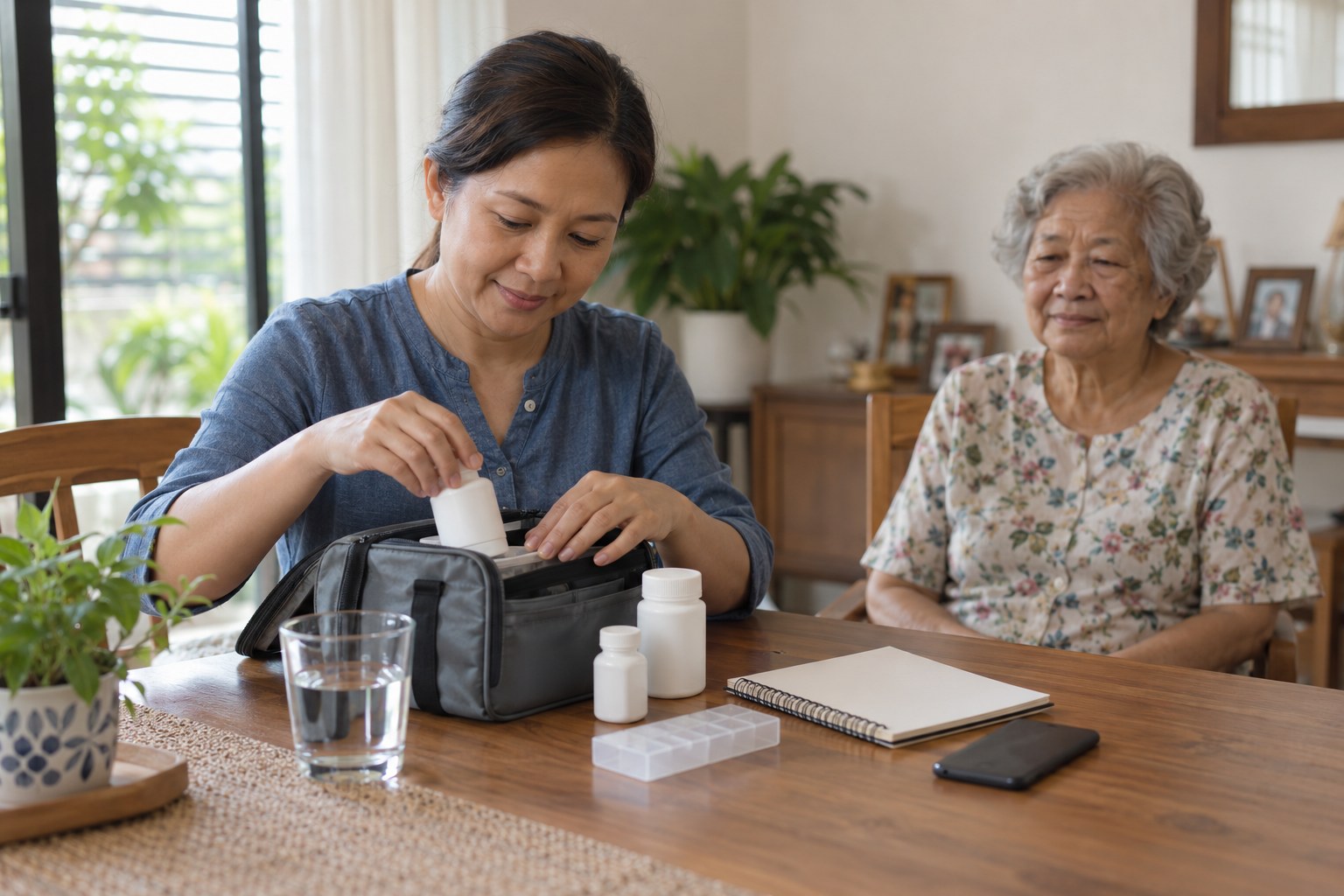
Put all current medicines in one place, including tablets, inhalers, eye drops, creams, supplements, and traditional products. Keep prescription slips, discharge summaries, blood test results, glucose readings, blood pressure records, and allergy information nearby. Malaysia’s Ministry of Health pharmacy programme describes Home Medication Review as a way healthcare professionals can assess medicine use and support patients and caregivers with knowledge.
This step is especially important for elderly home medical care because older adults may receive medicines from more than one clinic or hospital. The clinician needs the full picture before giving safe advice.
3. Prepare a safe, private, well-lit space
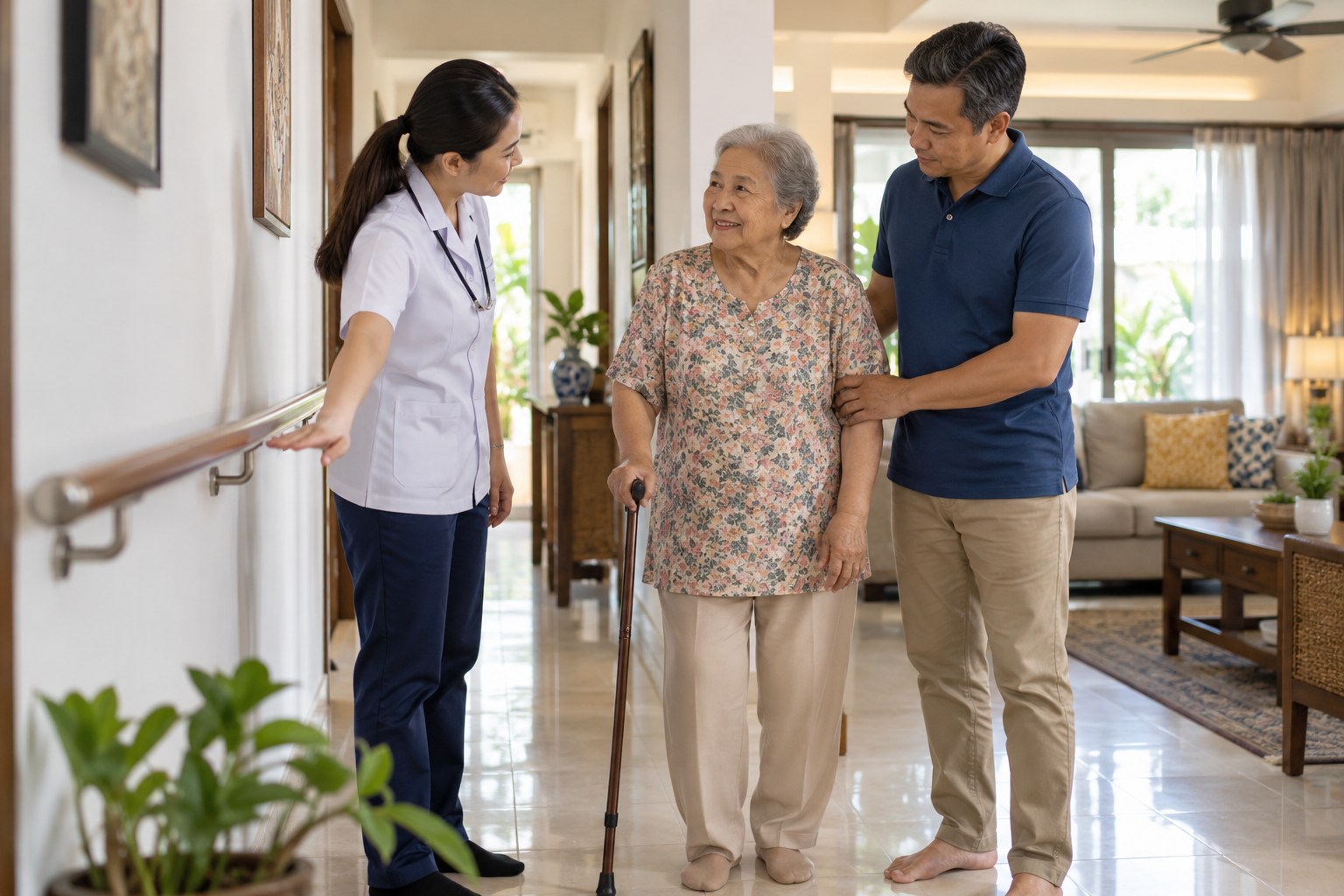
Choose a bright area with a firm chair, a small table, enough privacy, and space for simple checks. Clear loose rugs, wet floors, extension cords, and cluttered walkways before the visit. If the patient uses a walking stick, wheelchair, hearing aid, dentures, or glasses, keep them nearby so the assessment reflects normal daily life.
Elderly home medical care works best when the clinician can talk with the patient respectfully, not only with the caregiver. Privacy matters too, especially for symptoms involving mood, toileting, memory, pain, or family stress.
4. Track daily function, not only symptoms
Families often remember fever, cough, pain, or blood pressure numbers, but daily function can be just as useful. Note whether the older adult is eating, drinking, sleeping, walking, passing urine, opening bowels, taking medicines, and recognising familiar people as usual. Mention recent falls, near-falls, confusion, reduced appetite, or sudden changes in behaviour.
This does not mean every change is dangerous, but it helps the clinician judge whether the situation is stable or needs a different level of care. The National Institute on Aging’s falls and fractures guidance also highlights practical ways families can discuss fall risks and prevention with healthcare professionals.
5. Be honest about caregiver limits
Many Malaysian families manage elderly care around school runs, work shifts, transport, prayer routines, and other household responsibilities. Tell the clinician what is realistic. If wound dressing, medicine timing, feeding, or mobility support is difficult at home, say so clearly. A safe plan should fit the caregiver’s capacity, not only sound good on paper.
6. Know when a home visit is not enough
Elderly home medical care should not delay emergency treatment. Call 999 or go to the nearest emergency department for severe chest pain, serious breathing difficulty, stroke symptoms, fainting, heavy bleeding, severe injury, sudden severe weakness, very low responsiveness, or a rapidly worsening condition. A home visit is for suitable non-emergency concerns, not for situations that need immediate hospital-level care.
7. Agree on follow-up and warning signs
Before the visit ends, ask what to monitor, what changes should trigger urgent care, whether clinic follow-up is needed, and whether tests or referral may be appropriate. For chronic conditions, the next step might involve blood tests, medication review, wound review, blood pressure monitoring, diabetes follow-up, or a clinic appointment.
A written note helps everyone stay consistent. It can be as simple as: current concern, advice given, medicines discussed, warning signs, and follow-up date. This is one of the simplest ways to make elderly home medical care safer after the clinician leaves.
How Klinik Lanaamedik can fit into ongoing care
For families near Sungai Buloh and Shah Alam, home review may be one part of a wider care plan. Some concerns are suitable for discussion at home, while others need examination at a clinic, investigations, procedures, or referral. Klinik Lanaamedik’s wound care clinic page may be relevant when an older adult has a wound that is slow to heal or difficult to dress, while chronic disease follow-up may matter for diabetes, blood pressure, cholesterol, or long-term medication questions.
The safest approach is practical and steady: prepare the information, let the clinician assess the situation, and be open if the advice is to attend clinic or hospital. Elderly home medical care can support comfort and access, but the right setting depends on the patient’s symptoms and clinical risk.
A careful next step for your family
Elderly home medical care can make medical review more accessible for older adults who struggle with travel, especially when the concern is non-emergency and the family is prepared. Focus on clear information, medicine safety, a calm space, honest caregiver communication, and a follow-up plan that everyone understands.
This article is for general education for patients and families in Malaysia. For personal symptoms, medication questions, wound concerns, falls, or changes in an older adult’s condition, consult a qualified healthcare professional.
